
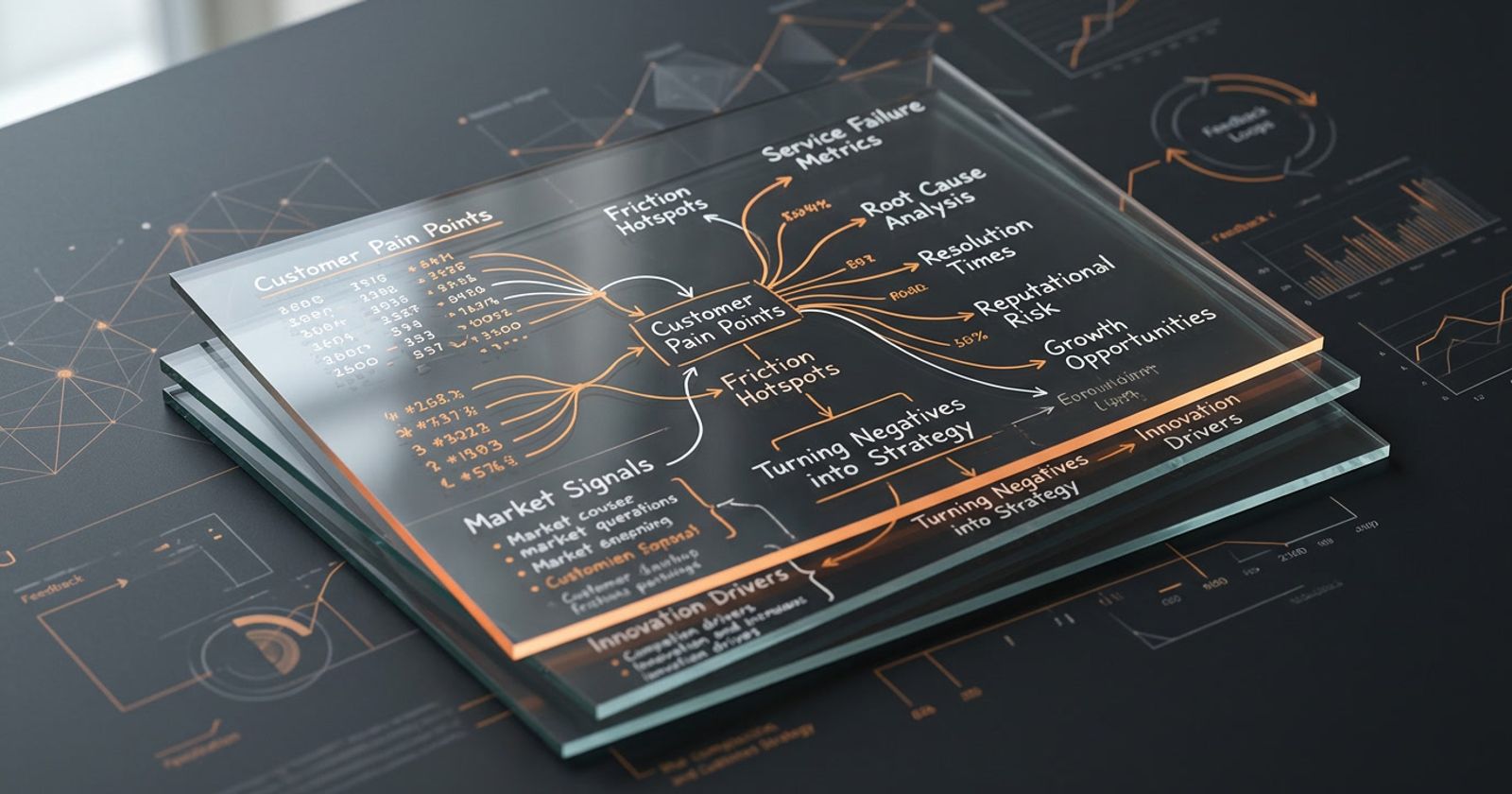
The Complaint Economy: Turning Online Friction Into Business Strategy
Most people in business panic when they see a customer complaint. If they spot complaints about a competitor, they celebrate and assume they are winning. If a user complains about their own product, they often do a quick audit, offer a refund or a polite apology, and assume the problem is solved.
This is a massive missed opportunity. A surface-level fix appeases one person but ignores the root cause. We need to look deeper into why people complain and start treating that friction as the most valuable data we have.
Why Complaints Are Important
Think about why people complain online in the first place. Imagine your washing machine breaks down. There is no way you can fix it yourself, so you call a technician to come to your home. They charge you 60 dollars just to walk through the door and diagnose the issue.
After checking the machine, they tell you it needs a specific replacement part. You add up the cost of that part plus the labor fee to install it, and you realize you are paying more money to fix an old machine than it would cost to buy a brand new one. If you knew this upfront, you never would have paid that initial 60 dollars. You are angry because you lost money on a hidden pricing trap, so you go online and write a long post about your frustrating experience.
Now look at this from a market researcher's point of view. You see this Reddit post, and as you dig deeper, you realize there are 15 other customers in the same community complaining about the exact same issue. If you ignore this pattern, you lose a competitive edge. This friction is a clear signal for a new business opportunity, perhaps a repair service with transparent upfront pricing or a remote diagnostic tool.
The internet is full of complaints. Let's be honest, a lot of them are just noise and unhelpful venting. To actually use this data, we need a reliable way to filter the useless rants from the valuable market signals.
The Anatomy of a High-Value Complaint
What makes a complaint useful? A low-value complaint is just someone saying a product is terrible. A high-value complaint gives you the exact mechanics of the failure. It tells you what the user was trying to achieve, where the workflow broke, and the exact cost in time, money, or emotional energy.
The most valuable complaints often include a workaround. When a user posts a five-step hack they invented to bypass a missing feature or a broken process, they are literally writing your product roadmap for you. They have already validated the problem and built a crude version of the solution. Your job is simply to build the refined version.
Why Scrolling is a Bad Research Strategy
As we said earlier, the internet is full of complaints. Users just find the opportunity to go and write about their experience with a product or a service they used. So if you want to sit down and read all those complaints, it is going to take forever. Scrolling through Reddit feed after feed doesn't really get us anywhere. We need a much better strategy to find the more valuable complaints and prioritize them.
Scrolling is a trap. When you rely on manual reading, you run into the loudest minority bias. The most dramatic and extreme posts get all your attention, while you miss the quiet, recurring patterns that actually drive a market. Treating community browsing as a casual activity will not scale.
What if we could have a scoring system? What if we could give a pain point or a bad experience a score to know exactly which one is the highest priority for us? That way we could see the biggest problems first, fix them first, and then move on to the next one. You need a structured approach to gather these complaints, group them into clear categories, and measure the actual volume of the problem across hundreds of conversations. You need to know exactly how many people are experiencing that washing machine pricing trap, not just that one person is angry about it.
Three Steps to Turn Chatter into Actionable Intelligence
1. Map the Territory First, you have to figure out where your target audience hangs out when they are frustrated. You cannot just search Google. You need to find the specific subreddits or forums where they go to ask for help. For example, if you are building a tool for freelance graphic designers, they probably aren't complaining on a generic business forum. They are in very specific design communities on a website like Reddit talking about how their current software crashes every time they try to export a large file. You have to be in the exact room where the conversation is happening.
2. Isolate the Core Intent Next, you need to look past the emotional language. People on the internet exaggerate. You have to filter out the nagging and focus purely on the underlying intent. Ask yourself what goal they were trying to accomplish when they got stuck. Let's say you see a post saying "This marketing software is a complete joke, it took me three hours to send a simple email." The valuable data here is not that the software is a joke. The real intent is that the email template builder is way too complicated for a beginner. You have to strip away the anger to find the actual mechanical failure.
3. Quantify the Volume Finally, you need to measure the problem. Never build a solution based on one viral post. One person getting 500 upvotes for a funny rant does not mean you have a validated business idea. You need to look for a cluster of similar complaints over time to prove the market demand is real. If you see that 50 different users in the last month complained about the exact same file export crash, then you have a real, quantified problem. That is when you know it is worth your time and money to step in and build a solution.
Conclusion
This is exactly why “NicheEngine” was created. We wanted to offer a real, practical solution for people who are actively looking for useful data on Reddit to fix market issues. By giving you a structured workspace to track pain points and group complaints automatically, NicheEngine helps you stop scrolling and start finding the exact problems your target audience needs you to solve.
Recommended next
Keep exploring

Pain Point definition: What Actually Qualifies as a Pain Point
The phrase pain point has become an empty marketing buzzword. In this article we talk about what actually is a pain point and how you can qualify a complaint as a real problem worth solving.
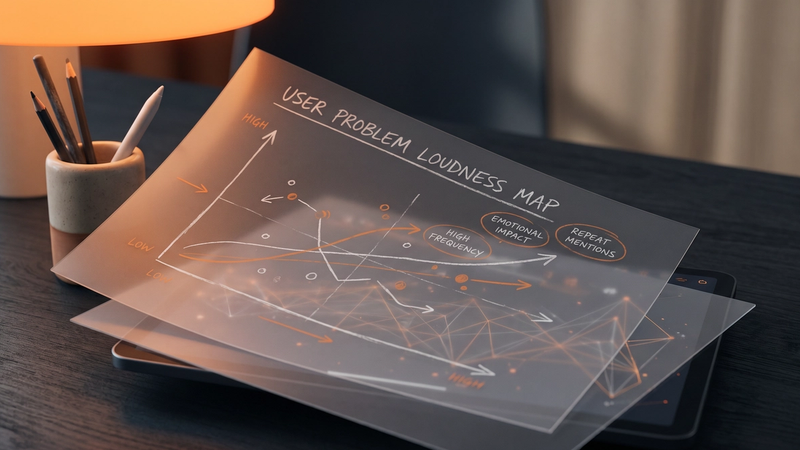
How to Measure the Loudness of a User Problem
What would you do if a user posts a massive rant about your product? Do you drop everything to fix it, or ignore it? Learn how to measure the real loudness of a problem before reacting.