

Pain Point definition: What Actually Qualifies as a Pain Point
Finding the real pain point is really important for us when we are designing our roadmap for the product we are implementing. We have limited resources and we need to focus on the real and actual problems.
When we are doing market research, we see lots of complaints about ourselves or our competitors. If we treat every minor complaint as a true pain point, our product roadmap will become a chaotic mess. We need a strict filter to qualify what is actually worth your time and resources.
A pain point is a specific recurring friction experienced by customers.
Most of the times, these issues are ongoing and sometimes they are not visible in the first place. It can be anything. It can be a bug in a system, a flaw in a software, or it could be poor customer service.
It can happen anywhere. In a business like a coffee shop, a pain point can be considered as something like a customer is not satisfied with the lid of the coffee cup. Why? Because it is wobbly and the coffee could spill with every move. The market researcher finds these ongoing customer complaints about the coffee cups, sees a clear pattern, and qualifies it as a pain point rather than just a daily nuisance.
This brings us to a very important step. We need to know exactly how to separate a passing complaint from a critical issue.
The Difference Between a Nuisance and a Pain Point
The Nuisance
A nuisance is a superficial complaint. A great example is a user who wishes your app had a dark mode. It is a nice addition to have, but almost nobody is canceling their subscription over it. It does not stop them from completing their work. This kind of feature can help your branding, but it is not actually considered a priority when you have lots of other more important problems that are affecting your income.
The True Pain Point
The true pain point is more like a structural failure.
Imagine a user spends two hours every Friday manually copying data from your app to an Excel sheet because your export feature is broken or missing. That is a real pain point because it costs them actual time, money, and sanity. If they see another competitor that does not have this problem and actually saves them some time, they can easily buy their subscription and move on from you. This is a real pain point and it is structural. It can be fixed, and then it gets a better priority.
Let's look at another example for a traditional physical product. Imagine a company selling a premium travel suitcase. A nuisance is a customer complaining that the suitcase does not come in a specific shade of blue. A true pain point is a customer realizing the wheels get jammed every time they roll it over a carpet at the airport. The color is just a preference. The jammed wheels represent a structural failure that ruins the travel experience and guarantees they will never buy that brand again.
Three Hints to Qualify a Pain Point
Here is how you can measure the complaints you find online to see if they are actually worth your attention.
Hint 1: The Cost A real problem always has a cost attached to it. The cost can be anything. It can be time, it can be money. When we see that the user is losing a resource unnecessarily when they are using our product, we can consider it as a pain point. They are paying us money for our service to save some resources. If we are not helping them, then it is a pain point.
For example, imagine you run a project management tool and your notification system is delayed by a few hours. Your users are losing money. A freelancer misses an urgent message from a client, the client gets angry and hires someone else, and the freelancer loses the contract. They lost actual revenue because your system failed them. That is a measurable cost and a highly qualified pain point.
Hint 2: The Workaround and Bypass If a user is trying to bypass the system or trying to find another way to make a process easier for themselves, pay close attention. Sometimes they find a third party tool to connect some dots in the structure of a system. This can absolutely be considered a pain point. You can score the severity of this by looking at the comments section of the post describing the bypass. When people in the comments are actually supporting the idea, saying it is great work, and confirming it saves them time, you have a validated problem. This shows that the system has a massive loophole. When you are researching competitors and see their users finding loopholes in the structure to bypass a broken process, you can consider it a qualified pain point. You can fix it natively in your own product and easily gain their attention.
Hint 3: The Long Term Friction This happens when you see a problem that has been there for a long time. Sometimes it does not really look big at first glance. Sometimes it just looks like something that is really shallow or it seems like everyone is happy dealing with it. One person experiencing a confusing interface is just a support ticket. Fifty people complaining about the exact same confusing interface over two years in a Reddit community is a validated market gap.
A good example, think about a popular local gym. A single member mentioning that the gym gets too hot in the afternoon is a minor complaint. But if you look closely and see that for the past three years, members have been propping the emergency exit open with a heavy dumbbell every single day at 5 PM just to get some fresh air, that is a long term structural pain point. It looks like a minor daily routine, but it is actually a complete failure of the building's ventilation system that management has ignored.
Where to Find the Raw Material
People normally do not know what they need. Most of the tools that give us keyword data are based on what people are actively searching. But since users are not experts, they do not know the industry jargon. They have a real problem, they come online to talk about it, but because they do not know the exact technical phrase, they search for something else entirely.
The key is UGC content!
What we can actually do here is to use UGC (User Generated Content) as the real source of our research. UGC can be comments on any website. Trustpilot is a golden source for finding user pain points. You can just open up a competitor on Trustpilot and you will instantly see lots of complaints about their structure and service.
You can also go to community based platforms like Reddit or Discord. Discord is a really good source for people that are part of a tight community. Reddit operates the same way. You can open up a conversation about literally any subject and see people in there screaming about their problems.
The thing is, this is raw material. We need to analyze it. We need to mine the real pain points from that raw material, and that is the real hard part for us.
Conclusion
This is exactly what we are fixing in NicheEngine. We watch conversations and we watch communities. We have the intelligence to mine the real pain from the stories and the journeys that the customers are taking and complaining about. We mine issues, score them and make actionable reports from them. If you want to stop guessing what your market needs and start finding the actual gaps your competitors are missing, maybe it’s not bad to give it a try.
Recommended next
Keep exploring
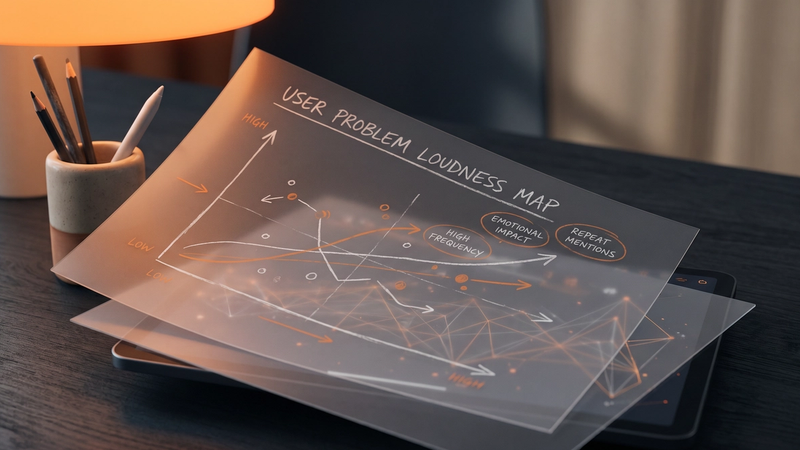
How to Measure the Loudness of a User Problem
What would you do if a user posts a massive rant about your product? Do you drop everything to fix it, or ignore it? Learn how to measure the real loudness of a problem before reacting.
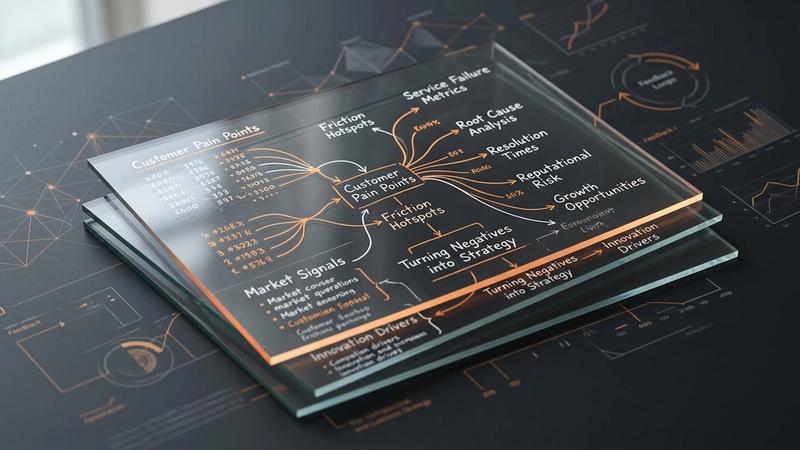
The Complaint Economy: Turning Online Friction Into Business Strategy
Complaints are one of the most valuable data you have. Learn how to skip endless scrolling and turn messy Reddit friction into the structured product roadmap inside of NicheEngine.